infrastructure
Brisbane Olympics 2032 — what it actually does to property prices
Brisbane House Prices Editorial · 24 June 2026 · 9 min read
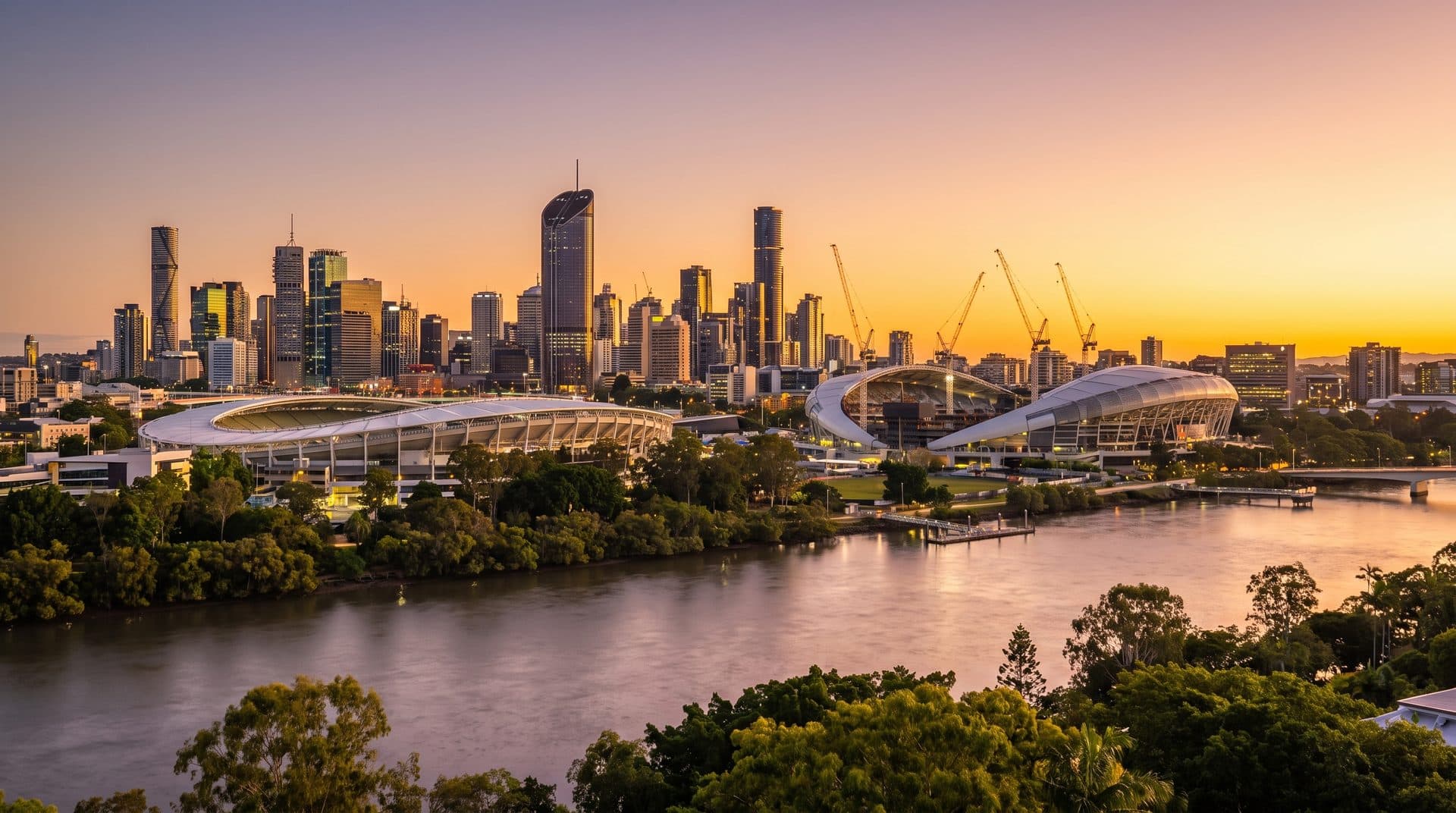
Brisbane is now six years out from the 2032 Olympics, and the property question that keeps coming up is the obvious one: how much, and where? The answer is more nuanced than the headlines. Olympic effects on property are real but uneven — and most of the price action happens before the opening ceremony, not after.
What Sydney 2000 actually did
The Sydney 2000 data is the most useful precedent we have. Suburbs that hosted venues or sat within walking distance of new transport infrastructure outperformed the wider Sydney market by 10–25% across the seven years leading into the Games. Homebush Bay, then a barely-known industrial precinct, became Sydney Olympic Park and produced compound annual growth above 12% from 1995 to 2003. The gains were concentrated in the pre-Games window. After the closing ceremony, most precincts simply rejoined the city trend line.
London 2012 — the regeneration play
London 2012 leaned hard on Stratford and the Lea Valley. Stratford homes appreciated 64% in the five years 2008–2013 versus a London-wide gain of around 23%. The Olympic Park anchored a permanent shift in how that side of London was perceived. The longer-tail benefit was infrastructure: Stratford's transport access, not the Games themselves, kept driving prices into the late 2010s.
Where the Brisbane 2032 gains will concentrate
Three groups of suburbs will get the lion's share of the Olympics premium. First, venue-precinct suburbs: Woolloongabba (athletes' village and main stadium precinct), Albion (Albion Park venue), and the Northshore Hamilton area (international broadcast and event hub). Second, transport-corridor suburbs: anywhere within a 10-minute walk of a confirmed Cross River Rail station or upgraded interchange. Third, lifestyle and accommodation suburbs that international visitors actually want — Bulimba, Hawthorne, New Farm, Teneriffe — because short-stay yields will be exceptional in the lead-up.
What about everywhere else?
Brisbane-wide, the Olympics has already been priced in to the broad market expectation — that's what the steady run-up since the 2021 announcement has been. The honest message: don't buy a suburb in 2026 because of the Olympics. The Olympic premium is concentrated, and it goes to suburbs that were already going to perform. Buy the suburb because the fundamentals — schools, transport, demographics, character stock — are sound. The Olympics is a tailwind on top of that, not a thesis on its own.
The timing question — when do prices peak?
Both Sydney and London show the same pattern: the venue-precinct premium peaks 12 to 18 months before the opening ceremony. By the time the Games arrive, the cycle has moved on. If you want to ride the Olympic premium specifically, the window is roughly 2028 to early 2031 — you sell before the supply hits and the news cycle moves on. If you're holding for ten or twenty years, the Olympic effect washes out and you're back to fundamentals.
The infrastructure tail is the real prize
Cross River Rail, the Brisbane Metro, arterial road upgrades, the airport-CBD rail extension — most of these were already planned or under way, but the Games accelerated them by years. The permanent transport gains are what keep paying after the cameras leave. The suburbs that benefit aren't the venue suburbs — they're the second-ring suburbs whose effective distance from the CBD just shortened by 10 minutes.
What buyers should actually do about all this
Three rules. One: if you're buying a venue-precinct suburb, accept you're paying a premium and your exit window is 2028–2031. Two: if you're buying a transport-tailwind suburb, you're playing a longer game and the timing matters less. Three: if you're buying for the lifestyle short-stay angle, plan for the regulatory shift — Brisbane Council will tighten short-stay rules in the lead-up. Get an honest valuation, look at fundamentals first, and treat the Olympics as the cherry rather than the cake.